Safe Walking Routes to School: What Every Parent Should Plan
5 May 2026
There’s something magical about going to school on foot, isn’t there? A quiet morning walk, birds chirping, a chance to chat with friends—it’s a wholesome start to the day. But let’s face it, as parents, our radar is permanently locked on “safety mode.” So how do we make sure those walks stay safe, cheery, and worry-free? That’s where a bit of planning comes in handy.
Whether your child is heading off to kindergarten or braving middle school, planning a safe walking route to school isn’t just a task—it’s part of your parenting toolkit. In this guide, we’ll walk (pun totally intended!) through everything you need to know to make school commutes safe, smooth, and even fun.
Why Safe Walking Routes Matter
Before we dive into the how-tos, let’s talk about the why. Creating a safe walking route isn’t just about avoiding busy roads and suspicious alleyways. It’s about independence, community, daily health, and peace of mind. When you know your child has a clear and secure path to school, those anxiety levels drop fast.Think of it as building a yellow brick road—not to Oz, but to the school gates. One step at a time, literally and figuratively.
The Benefits of Walking to School (Safely!)
Okay, let’s get something straight—walking to school is loaded with perks. When it’s safe and consistent, it can be the golden ticket to a healthier and more grounded start to your child’s day. Here's why:- Daily exercise: A brisk walk gets the blood flowing and sets the tone for a productive school day.
- Fresh air & focus: Walking clears the head and helps with brain function. Win-win!
- Social time: Walking with friends can improve mood and social skills.
- Confidence booster: Kids love a healthy dose of independence!
- Eco-friendly: Fewer cars mean happier lungs and a healthier planet.
So yeah, walking rocks—as long as it’s done safely.
Start With a Walk Audit ?️
Nope, this doesn’t require a clipboard and a high-vis vest (though feel free to go all out!). A walk audit is simply a way for you to assess the everyday environment around your neighborhood and the school.Here’s how to carry one out:
1. Walk the Route Yourself
If there’s one rule to follow—it’s this: never assume. Walk the route solo or with your child and take mental notes.- Are there sidewalks on both sides?
- Are crosswalks clearly marked?
- Do traffic signals give enough time to cross?
- Are there blind corners or overgrown bushes?
- Is there street lighting for cloudy mornings?
2. Time It
Kids walk slower than adults (especially when distracted by shiny rocks or ants crossing the sidewalk). Make sure the route is reasonable time-wise—even with dawdling.3. Note Trouble Spots
Is there a busy intersection? A creepy alley? A dog that barks aggressively from behind loose-looking fencing? These are red flags.Mark them all. Then we'll plan around or address them.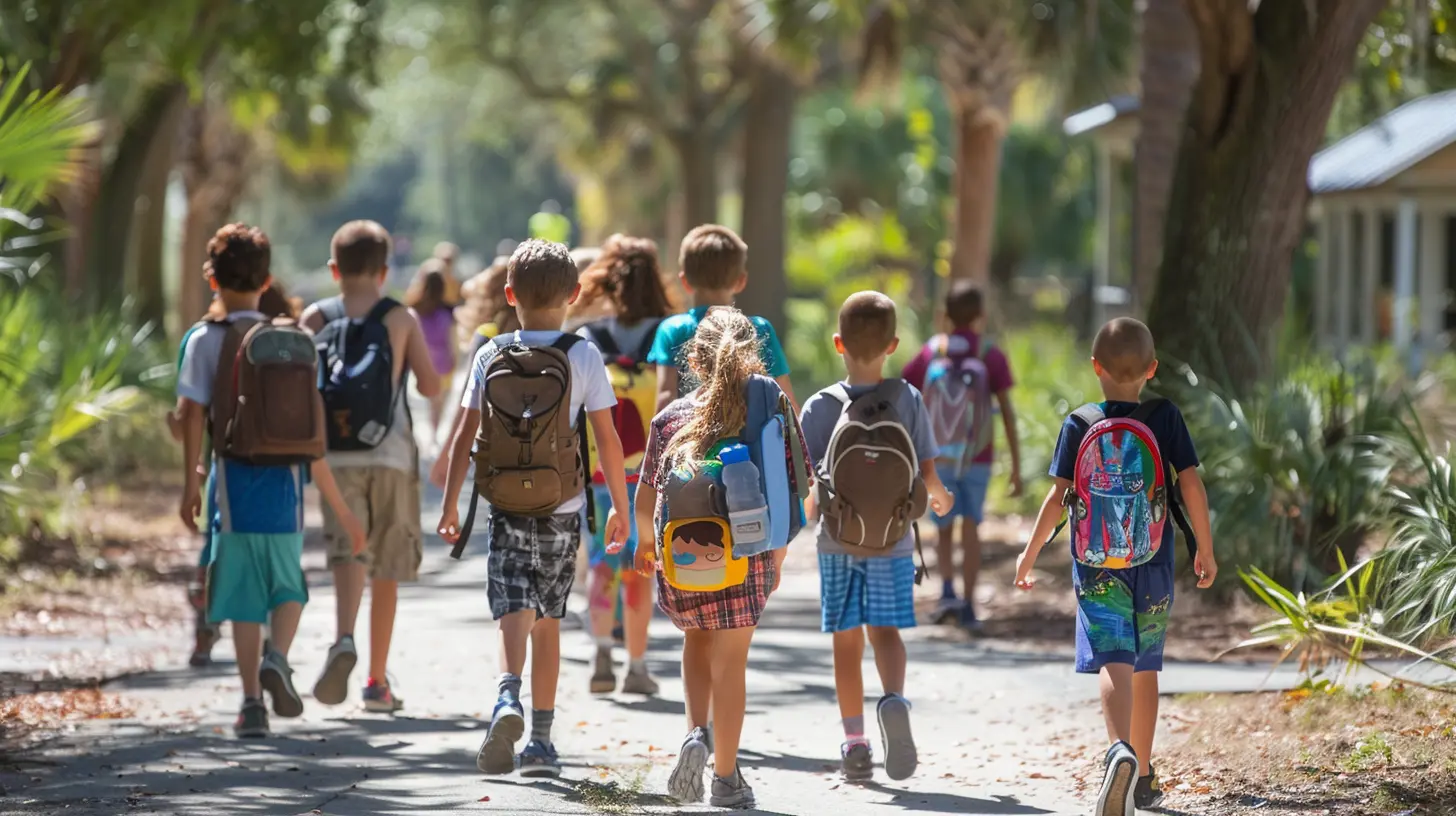
Partner With Other Parents
Safety in numbers, friends! If you’re concerned about your child walking alone, coordinate with other parents in the neighborhood.Enter the “Walking School Bus"—a golden idea where a group of kids walk together under adult supervision. Someone leads from the front, another watches the rear. It's the carpool alternative that gets kids moving and mingling.
Set up a group chat. Create a schedule. Rotate responsibilities. Bonus: You’ll get to know your neighbors better, and your child will enjoy walking with their buddies.
Talk to Your Child About Safety (Like, Really Talk)
You know what's underrated? A good old-fashioned heart-to-heart. Kids don’t need a lecture; they need conversation.What to Cover:
- Look both ways before crossing. Always.- Walk, don’t run—especially near roads.
- Don’t talk to strangers (yes, the old classic still applies!).
- Stick to the route! No shortcuts, no surprises.
- Know what to do if lost. Practice this part.
Role-play a few situations—what to do if someone follows them, offers them a ride, or if they fall and get hurt. Make it a game but keep it real.
Choose the Right Gear ??
Yep, even walking requires the right gear. You wouldn’t send your kid off without a lunchbox, so don’t forget the essentials for walking.Backpack:
Ensure it’s comfy, not overloaded, and fits snugly.Bright Clothing:
Try reflective or brightly colored clothing to be more visible—especially during foggy or early morning hours.Shoes:
Say no to flip-flops and yes to proper walking shoes with good grip.Reflectors:
These are invaluable, especially during fall and winter. Reflective armbands, stickers, or backpack tags can significantly boost visibility.Establish a “Check-In” Routine
Let’s be honest—texting your child every five minutes isn’t an option (and it’s probably going to annoy them, too). Instead, create a simple check-in protocol.Options include:
- A quick call or text when they arrive
- Location-sharing via mobile app
- Asking school staff to confirm arrival for younger kids
Whatever method makes you feel secure—go with it. The goal is to create a habit that reassures you both.
Get the School on Board ??
Schools are your partners in this journey—use that!Chat with the school about things they can do to help:
- Crossing guards at busy intersections
- Safe drop-off/pick-up zones away from walking routes
- Parent patrol volunteers
- Bike/walk to school days to build community support
Some schools even work with local police or municipalities to address issues like speeding or poor sidewalk maintenance. Advocacy works, people!
Create a Backup Plan
Not every day goes according to plan. Rain, construction, or an unexpected errand might mean your child can’t walk the usual route.Work out a Plan B (maybe even a Plan C):
- Can you drive them occasionally?
- Is there a neighbor who can lend a hand?
- Can your child take the bus if needed?
Keeping your options open means less scrambling on those unpredictable days.
Map It Out and Practice, Practice, Practice
Once you’ve chosen the safest, most efficient, least squirrel-distracting route, draw or print it out for your child. Add landmarks like:- The corner store
- Stop signs
- Your friend’s house on the corner
- Big oak tree by the mailbox
Then, practice. Not once. Not twice. But several times so it becomes muscle memory. Try it in the morning and after school hours to get a feel for different lighting and traffic.
Encourage Your Child to Be a “Street-Smart Superstar”
Praise works wonders. When your child follows safety rules, gets to school on time, or reacts well to an unexpected situation—shower them with kudos. That positive reinforcement creates lasting habits.Turn it into a badge system. Or a high-five ritual. Or maybe even Saturday pancakes. Whatever works for your family!
Keep Reviewing as They Grow
Here’s the thing—kids grow (fast!) and with each year, their needs change. So should their walking plans.Re-evaluate routes each school year and even mid-year if new construction or traffic patterns pop up. Teach them how to make smart, situational decisions, and eventually, they’ll navigate the world with confidence.
Just like riding a bike, safe walking becomes second nature—but the road to get there needs your support.
Final Thoughts: Safety First, Always With Love ❤️
Walking to school might seem like a small thing, but it's a big step toward raising independent, confident kids. Will it take a little effort to create the perfect route? Sure. But once it's in place, it becomes a daily mini-adventure that builds connection, responsibility, and a whole lot of life skills.So grab your kiddo’s hand, map out the path, and start creating mornings you’ll both love. Because some of life’s greatest learning happens before the school bell even rings.
all images in this post were generated using AI tools
Category:
Child SafetyAuthor:

Liam Huffman
Discussion
rate this article
2 comments
Celine Kirk
Every parent should know their child's route to school like the back of their hand. Safety is non-negotiable. Scout the path, stay informed, and ensure your kid's journey is as secure as possible.
June 9, 2026 at 4:22 AM
Liam Huffman
I completely agree. Knowing the route ensures peace of mind and helps keep kids safe on their way to school.
Jolene McLaurin
Great tips for keeping our kids safe walking to school!
May 25, 2026 at 3:54 PM
Liam Huffman
Thanks for your support! Keeping kids safe is a top priority.