Teaching Pedestrian Safety: How to Help Your Child Safely Navigate Streets
29 May 2026
Let’s be real—watching your child confidently walk to school or the playground while safely navigating traffic is a dream for every parent. But here's the thing: pedestrian safety isn’t something kids just pick up by osmosis. They don’t magically know when it’s safe to cross the street or why darting out from between cars is dangerous. That's where we come in.
You wouldn't hand your kid the car keys without a few driving lessons, right? Same goes for walking near traffic. Whether your child is a toddler tagging along on neighborhood strolls or a pre-teen starting to walk home from school solo, teaching them pedestrian safety is one of the most important lessons you'll ever pass along.
So, in this post, we’re diving into everything you need to know to help your child become a smart and safe pedestrian. We’re unpacking real talk, practical tips, and a few personal tricks that’ll make this serious subject a little less overwhelming.
Why Pedestrian Safety Matters More Than Ever
Let’s start with the hard truth: traffic accidents remain one of the leading causes of injury for children. And it’s not just the wild, busy intersections—we’re talking neighborhood streets, school zones, even driveways.Kids are naturally curious and easily distracted (squirrels, anyone?). Combine that with their limited understanding of speed, distance, and driver behavior, and it’s easy to see why pedestrian safety education is essential.
Think of it this way: teaching your child how to walk near traffic is just as vital as teaching them how to swim or use scissors safely. It's not about fear—it's about confidence and awareness.
When to Start Teaching Pedestrian Safety
You might be wondering, “Is my child too young to learn this stuff?” Short answer? No.Even toddlers can start learning the basics! Use age-appropriate language and build on that foundation as they grow.
Here’s a rough guide by age:
- Ages 2-4: Hold hands, stop at curbs, and start using simple phrases like “Stop, look, and listen.”
- Ages 5-7: Begin making them more aware of traffic signs, crosswalks, and the basics of making eye contact with drivers.
- Ages 8-10: Let them take small steps toward independence—walking partway to school with supervision, for example.
- Ages 11+: Start prepping them for solo walking trips with more complex safety scenarios.
Bottom line? Start early, keep it simple, and teach through repetition.
The Golden Rules of Pedestrian Safety
There are a few golden rules every young walker should memorize (and live by). Let’s break them down.1. Stop, Look, and Listen
The holy trinity of crossing the street.Before crossing:
- Stop at the edge of the curb or driveway.
- Look left, right, then left again.
- Listen for approaching vehicles (sometimes you hear it before you see it).
Got a talkative little one? Make this a fun chant or game when you're out walking together.
2. Use Crosswalks and Traffic Signals
Always cross streets at marked crosswalks or intersections—never in the middle of the road. Teach them the meaning of walk signals and “Don’t Walk” signs. And yes, even when the signal says “Walk,” they should still check both ways!Imagine it like a green light at an intersection—it gives permission to go, but it doesn’t guarantee safety. A distracted driver might blast right through that crosswalk.
3. Make Eye Contact with Drivers
This might be the most overlooked tip, but it's crucial. Teach kids to make eye contact with drivers before stepping off the curb. It’s a non-verbal handshake that says, “You see me, right?”And if there's any doubt? Wait it out.
4. Avoid Distractions
We get it—those little legs get excited. But kids should never walk with headphones on or eyes glued to a screen. No texting, no scrolling, and absolutely no game-playing while walking. Walking and screen-time don’t mix.Instead, be the example. Put your phone away when walking with your child and model the behavior you want them to copy.
5. Be Visible, Be Predictable
Bright clothes during the day, reflective gear at night. Walking in groups also helps. Teach your child to walk facing traffic when there are no sidewalks, and avoid crossing between parked cars (because drivers can’t see them!).Their job is to be seen. Bright jackets, light-up shoes, and reflective backpacks? That’s not fashion—it’s survival gear.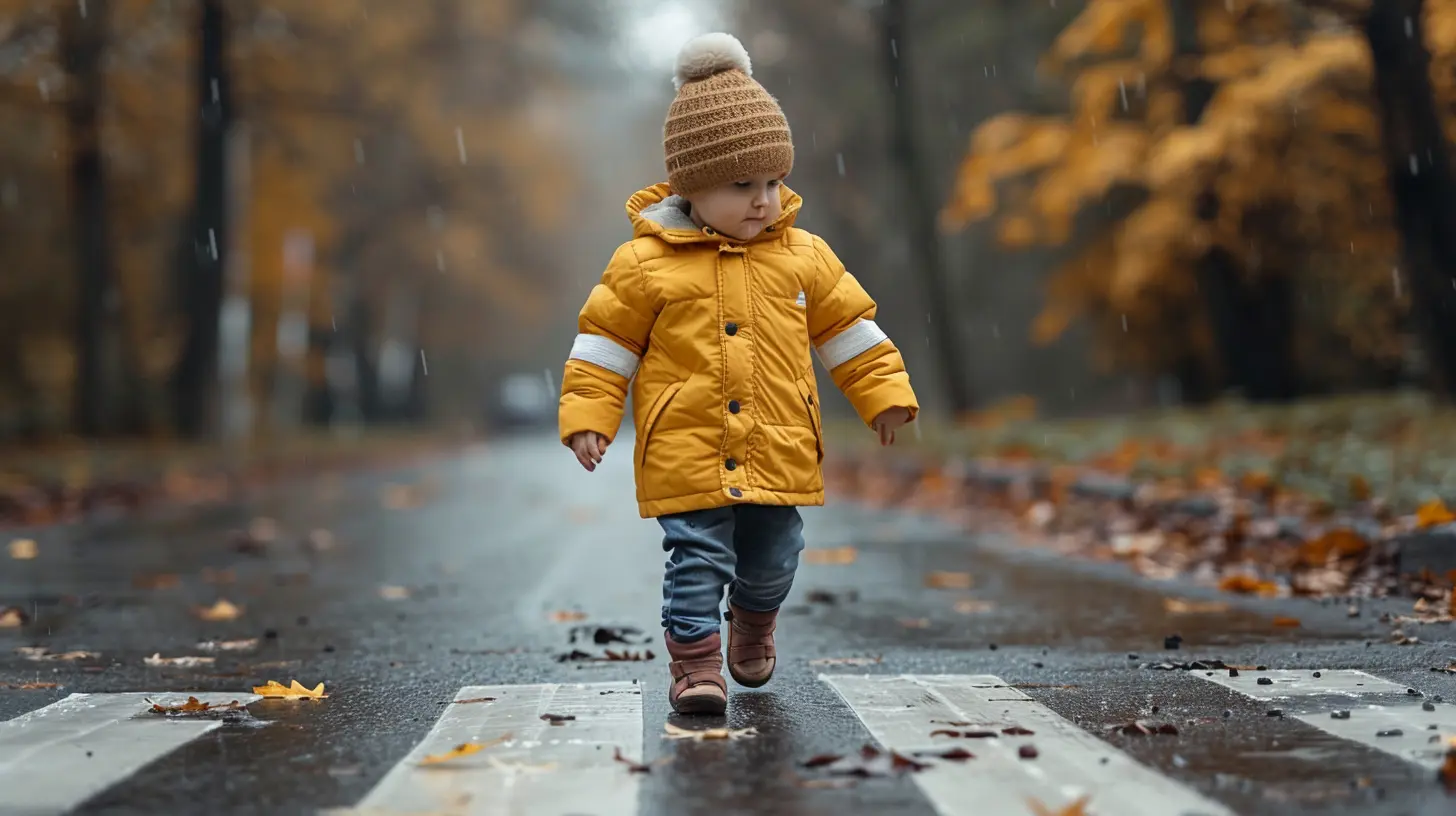
Modeling Safe Behavior: Walk the Walk (Literally)
Let’s talk about the power of habits. Kids are like little copy machines—they imitate what they see. If you jaywalk, check your phone while walking, or cross on a red light, guess what? They will too.So whenever you're out and about, be the role model they need:
- Narrate your decisions: “Let’s wait for the walk signal,” or “I hear a car coming, let’s wait.”
- Praise their awareness: “Great job looking both ways!”
- Keep things consistent: Safety is not just for school commutes—practice it at the mall, the park, even grandma’s street.
Think of yourself as their pedestrian coach. The more you practice, the more natural it becomes.
Making It Fun: Turn Safety Lessons into Games
Let’s face it—kids don’t want a lecture. But turn it into a game, and suddenly you’ve got their attention. Try these ideas:? Red Light, Green Light (With a Twist)
Use this classic game to sneak in safety skills. Call out:- “Green Light” = Walk (but look left-right-left)
- “Red Light” = Stop
- “Yellow Light” = Get ready to stop / check surroundings
? Safety Spotter
While walking, challenge your child to spot:- Traffic signs (Stop, Yield, etc.)
- Sidewalks
- Crosswalks
- Signal buttons
Whoever spots the most wins!
? Safety Scenario Roleplay
Use toys, action figures or even yourselves to act out what to do at busy intersections, when sidewalks are missing, or when a car suddenly backs out of a driveway.Preparing for a Solo Walk: Is Your Child Ready?
One of the scariest milestones is letting your child walk somewhere without you. The key is gradual, supervised independence. Here’s a checklist to help you decide if they’re ready:✔ Can they identify and use crosswalks?
✔ Do they follow pedestrian rules without reminders?
✔ Are they aware of their surroundings (not easily distracted)?
✔ Have they practiced walking the route multiple times with you?
✔ Do they know what to do if they get lost?
Once they check all the boxes, begin with short, familiar routes and slowly build up from there.
Pro tip: Walk the route together many times first. Talk about landmarks, discuss "what if" scenarios, and make sure they’re comfortable before that first solo stride.
What to Do When Streets Aren’t Kid-Friendly
Not every neighborhood is lined with sidewalks and friendly crossing guards. If your area doesn’t prioritize pedestrian safety, you’ll need to get a little creative.Here are some extra precautions:
- Choose safer, slightly longer routes with sidewalks or crossing signals.
- Talk to other parents and consider group walking.
- Teach your child to walk facing traffic and stay as far from the road as possible.
- Advocate for safer walking routes in your community (yes, your voice matters!).
Pedestrian Safety for Teens: The Next Level
Once your child hits the teen years, you might think your job is done. Not quite.Teens are more likely to be distracted, overconfident, or under pressure to impress friends. Combine that with earbuds, phones, and a slight feeling of invincibility—and you’ve got a recipe for risk.
Have ongoing conversations about:
- Staying alert (putting phones away while walking).
- Avoiding shortcuts through unsafe areas.
- Sticking to well-lit, familiar paths.
- Walking in groups whenever possible.
Remind them that being “too cool” to follow the rules isn’t worth the risk. Respecting traffic laws isn’t nerdy—it’s smart.
Final Thoughts: Keep the Conversation Going
Teaching pedestrian safety isn’t a one-and-done talk. It’s an ongoing conversation, layered with practice, patience, and praise.Start early. Keep calm. Stay consistent.
And most importantly, walk with them, not just beside them. Show them how to be aware without being afraid, cautious without being nervous.
You're not just teaching them how to cross the street—you’re helping them cross confidently into a world where they can think for themselves.
all images in this post were generated using AI tools
Category:
Child SafetyAuthor:

Liam Huffman
Discussion
rate this article
1 comments
Shelby Sharpe
While teaching pedestrian safety is vital, it's essential to go beyond rules and encourage critical thinking. Kids should learn to assess situations and understand their surroundings, fostering lifelong safety awareness.
June 4, 2026 at 4:54 PM