The First Steps: When Twins Start Walking at Different Times
23 May 2026
So, your twins aren’t hitting that magical milestone—walking—at the same time? First off, breathe. It’s completely normal. In fact, it happens more often than you’d think. But when one of your precious twosome starts toddling across the room and the other is still content crawling or scooting on their bum, it’s mighty hard not to worry.
Let’s chat about it. We’re going to get into the why, the how, and importantly, the what-you-should-do (spoiler: it’s not panic!). Because parenting twins is an adventure, and like any good story, the plot doesn’t always follow a straight line.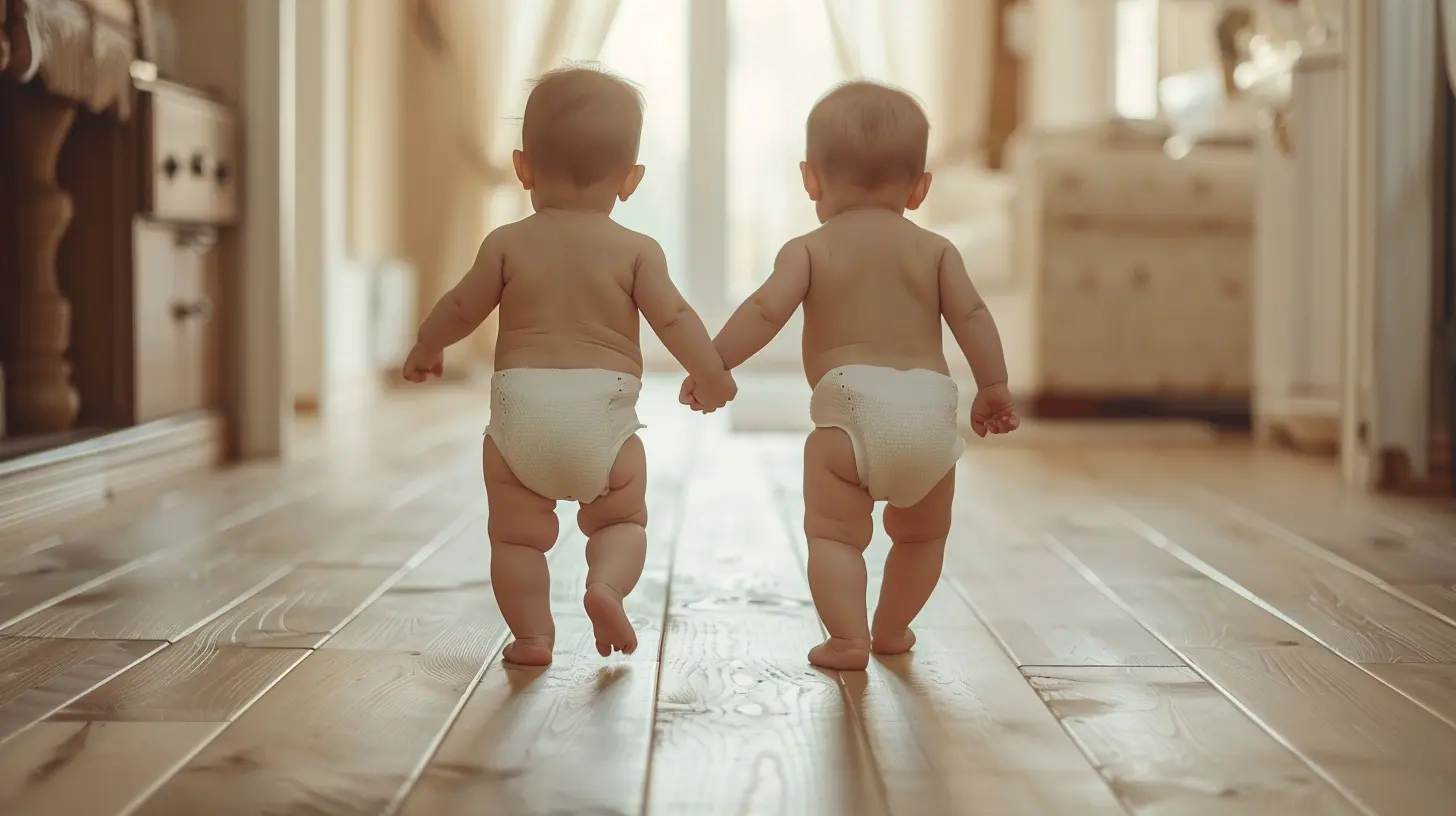
Twin Talk: Same Birthday, Different Timeline
It’s easy to assume that twins—especially identical ones—should hit milestones at the same time. I mean, they shared a womb, right? Same age, same environment, same parents always talking in unison about how tired they are. Everything’s the same—except it’s not.Twins are individuals. Yep, even if they look like carbon copies of each other. They each have their own pace, preferences, and personalities. And that includes when they take their first steps.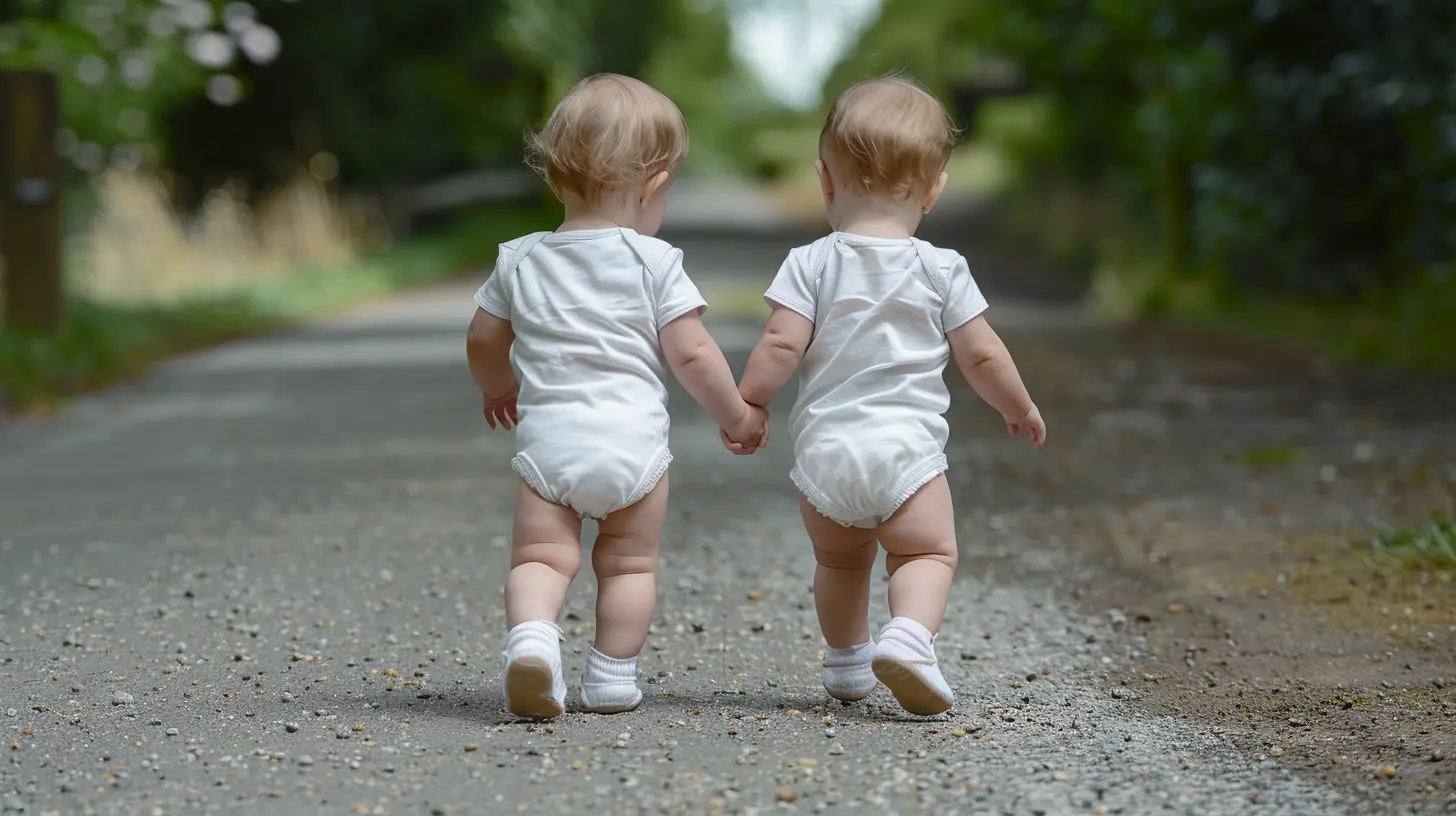
What’s “Normal” Anyway?
Let’s talk numbers. Most babies start walking somewhere between 9 and 18 months. That’s a pretty big window. Now add twins to the mix. One may lace up their imaginary sneakers and start walking at 10 months while the other isn’t quite there by 14 months. And guess what? That’s okay.There’s no “walking police” ready to hand out tickets for late walkers. Milestones are guidelines—not deadlines.
Reasons Why One Twin Might Walk Before the Other
There are quite a few completely normal reasons why your twins might hit the walking milestone at different times. Let’s break it down.1. Different Personalities
Have you noticed one twin is the bold explorer and the other is the quiet observer? Your little daredevil might be eager to get up and go, while your thinker is happy to study the world from the floor. It's not a race—just different approaches to life.2. Developmental Variation
Even genetically identical twins can develop at different paces. One baby’s motor skills may mature more quickly, while the other might be ahead in language or social cues. It balances out in the end.3. Birth Order and Size
We’re not saying the “older” twin has an advantage, but sometimes birth order or size can play a role. If one twin was slightly heavier at birth or has a bit more muscle mass now, they might have an easier time bearing weight and balancing.4. Motivation and Opportunity
Maybe one twin saw a toy across the room and decided walking was finally worth it. Or the walking twin had more practice standing because, say, they’re the one who always gets picked up first. Little interactions can spark progress.
Comparing Can Be a Trap
It’s tough not to compare. You’re looking at two tiny humans who share nearly everything—food, clothes, bedtime stories—and you’re thinking, “Why isn’t this one walking yet? What’s wrong?”Let me stop you right there.
Nothing’s wrong.
Comparison is natural but rarely helpful—especially in parenting. Instead, try celebrating each child’s unique journey. One might be sprinting down the hallway, while the other is master of the bum shuffle. Both are progressing.
What Should You Do as a Parent?
Alright, so what’s your role in all this beautiful, messy twin-wrangling journey?1. Support and Encourage Without Pressure
Your twins will walk when they’re ready. In the meantime, cheer on their attempts, offer a steady hand, and celebrate the wobble-falls and couch-cruises.The tone you set matters more than you think. A relaxed and positive vibe says, “You’ve got this when you’re ready,” instead of “Why aren’t you doing it yet?”
2. Offer Equal Practice Time
Make sure both twins are getting their moments to stand, cruise, and explore. Sometimes the more mobile twin unintentionally hogs the spotlight (and floor space). Give their sibling a chance to shine, too.3. Create a Safe and Encouraging Environment
Take a look around your living space. Is it set up for exploration? Are there things to pull up on, walk between, and soft areas for the inevitable plop-downs? A safe, inviting space encourages both babies to try new things without too much risk.4. Avoid Labeling
It’s tempting to give nicknames like “the athletic one” or “the cautious one.” But labels stick. Even innocent ones can shape how kids see themselves down the line. Let them define who they are at their own speed.When to Worry (And When Not To)
Okay okay, so when should you be concerned?As a general rule, if one twin hasn’t shown any signs of pulling up, bearing weight on their legs, or cruising around furniture by 18 months, it’s a good time to talk to your pediatrician. But remember, walking late doesn't automatically point to a problem—it could just be their personal timeline.
Red flags to keep an eye on:
- Not bearing weight on legs by 12 months
- One side of the body seems weaker or not as active
- No attempts to stand or cruise by 15 months
- Regression (walking and then stops for no clear reason)
But again—one twin walking earlier isn’t itself a red flag. Trust your instincts, not just the calendar.
Real Stories From Twin Parents (Yes, You’re Not Alone)
You’re definitely not the first twin parent wondering about mismatched milestones. Here are a few snapshots from real-life twin tales:> “My daughter walked at 10 months. Her brother? Not until 15 months. Today, he outruns her at every playground—we call him the ‘tornado.’”
> “We were convinced something was wrong when only one of our twins started walking. Our doctor laughed and said, ‘Give it time.’ Now they race each other to the fridge.”
> “One of our twins seemed scared to walk. She finally did it the week after her sister. She just needed to do it on her own terms.”
There’s comfort in knowing this happens often—and it works out just fine.
Walking Isn’t Everything
Here’s the kicker: walking is just one milestone in a whole lifetime of them. Soon enough, you won’t remember who walked first. You’ll be too busy chasing them around, breaking up toy debates, and wondering if you’ll ever finish a hot coffee again.Milestones aren’t medals. They’re just signposts on a winding, beautiful, chaotic road. And every child—yes, even twins—takes their own unique path.
Final Thoughts: Twin Steps, Individual Journeys
If you’re sitting there watching one twin take off while the other lingers behind, just remember: this moment is fleeting. Walking is coming. You’re not doing anything wrong. Your twins are just doing their thing—in their own time.They may have started life in sync, but their individuality will show more with each passing month. That’s part of the twin journey. Two totally different humans, growing side by side.
So, let them walk when they’re ready—whether it’s together or not.
Because the first steps? They're just the beginning.
all images in this post were generated using AI tools
Category:
Parenting TwinsAuthor:

Liam Huffman
Discussion
rate this article
2 comments
Raelyn Pratt
Every child's journey is unique; celebrate their milestones.
July 22, 2026 at 3:11 AM
Liam Huffman
Absolutely, each child's path is special. Celebrating those milestones, no matter the timing, makes the journey even more meaningful.
Reina McInerney
It's fascinating how individual development varies, even in twins. Each child's timing reflects unique growth patterns, highlighting the importance of patience and support during their milestones.
May 26, 2026 at 3:22 AM
Liam Huffman
Absolutely. It's incredible to see how even twins can have their own paths. Every step is a reminder of their unique journeys.