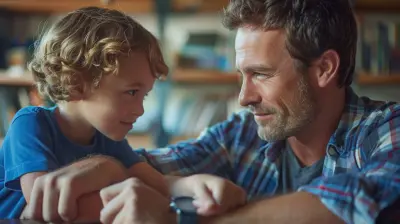
Encouraging Children to Take Ownership of Their Actions
28 December 2025
Parenting is a rollercoaster ride, isn’t it? One moment, you're celebrating your child’s success, and the next, you're knee-deep in spilled juice and a chorus of "It wasn’t my fault!" As parents, one of the most valuable lessons we can teach our kids is taking responsibility for their actions. Sure, it’s not the easiest thing in the world (parenting rarely is), but it’s one of those life skills that will serve them well into adulthood. So, how do we encourage our little humans to own up to their mistakes, choices, and behaviors? Grab a cup of coffee and stick around—I’ve got you covered! 
Why Does Taking Responsibility Matter?
Let’s start with the “why.” Why is it even important for kids to take ownership of their actions? Well, when children learn that their choices have consequences—both good and bad—they start to develop a sense of accountability. This skill helps them navigate relationships, school, and eventually the workplace. It also builds integrity, self-esteem, and trust.Imagine this: Your child spills milk all over the table. Instead of blaming the dog or their sibling, they say, “Oops, I knocked it over. Let me clean it up.” Sounds like a dream, right? But teaching this mindset takes time, patience, and a sprinkle of strategy. Let’s dive into how you can make it happen.
Start with Your Own Example
Ever notice how kids pick up on the tiniest things you do (but conveniently ignore what you say)? That’s because they’re professional mimics. If you want your child to take responsibility, start by showing them what that looks like.For example, if you lose your temper and snap at someone, own up to it. Say, “I’m sorry I yelled. That wasn’t the right way to handle things.” When kids see you acknowledging your mistakes, they’ll realize it’s okay to mess up—as long as you take responsibility and try to make it right.
Let Them Make Choices (and Face the Consequences)
Kids can’t learn responsibility if they’re not given chances to make decisions. Let them choose between small things, like what to wear or what to eat for lunch. If their choice doesn’t pan out—like wearing a T-shirt on a chilly day—resist the urge to swoop in and save the day.Instead, let them face those natural consequences (within safe limits, of course). This helps them connect the dots between their actions and outcomes. The lesson will stick far better than any lecture could.
Use Empathy, Not Shame
We’ve all been there—you’re frustrated, they’re frustrated, and the words “Why can’t you just listen?!” are on the tip of your tongue. But here’s the thing: Shaming your child for their mistakes can make them defensive or fearful of owning up in the future.Instead, show empathy. Say something like, “I know it’s tough to admit when you’ve made a mistake. I’ve been there too.” This keeps the conversation open and helps them feel safe enough to take responsibility without fear of judgment.
Teach Problem-Solving Skills
Once your child has admitted to a mistake, the next step is helping them figure out how to fix it. This teaches them that taking responsibility isn’t just about saying “sorry.” It’s about making amends and finding solutions.For example, if your child accidentally breaks a toy, ask, “What do you think we can do to fix this?” Maybe they’ll come up with the idea to glue it back together or save up money for a replacement. Problem-solving empowers them and reinforces accountability.
Praise Ownership
Let’s be real—kids thrive on praise. When they take responsibility for their actions, no matter how small, make sure to acknowledge it. A simple “I’m really proud of you for admitting that” can go a long way.Positive reinforcement helps them associate owning up to their actions with a sense of pride and accomplishment. It’s like giving them a gold star for good behavior, but without the stickers.
Keep Expectations Clear
Kids don’t come with an instruction manual (wouldn’t that be nice?), so it’s up to us to set the rules. Be clear about your expectations and the potential consequences of not meeting them.For instance, if your child knows that screen time is tied to finishing homework, it’s easier for them to connect the dots when they don’t finish their assignments. Clear boundaries set the stage for accountability.
Avoid the Blame Game
Let’s be honest—sometimes it’s tempting to point fingers. But constantly blaming others creates a culture where mistakes are feared instead of opportunities to learn.Try to create an environment where mistakes are seen as a chance to grow. Instead of saying, “Why did you let this happen?” try, “What can we learn from this situation?” Shifting the focus from blame to growth encourages kids to own up without fear.
Make It Age-Appropriate
Accountability looks different at every age. A toddler might not understand complex consequences, but they can still learn basics like cleaning up their toys. Older kids, on the other hand, can handle more nuanced discussions about responsibility.Tailor your approach to your child’s developmental level. The key is to make the concept of ownership something they can grasp and act on, no matter their age.
Be Patient
Let’s get one thing straight: Teaching responsibility is not a one-and-done deal. It’s a process that takes time, patience, and consistency. There will be setbacks (and plenty of “It wasn’t me!” moments), but don’t let that discourage you.Every time you guide your child toward taking ownership of their actions, you’re planting seeds that will grow over time. Trust the process and celebrate the small wins along the way.
Wrapping It Up
Encouraging children to take ownership of their actions isn’t just about raising well-behaved kids. It’s about teaching them valuable life skills like honesty, accountability, and problem-solving. Yes, it takes effort, but the rewards are worth it.Remember, your kids are watching and learning from you every step of the way. Be the role model they need, give them room to make mistakes, and guide them lovingly toward being responsible, thoughtful individuals. Who knows? One day, you might just hear an unprompted, “I’m sorry, that was my fault,” and feel like you’ve won the parenting jackpot!
all images in this post were generated using AI tools
Category:
Teaching ResponsibilityAuthor:

Liam Huffman
Discussion
rate this article
2 comments
Caitlin McGuire
In nurturing hearts, we plant the seeds, With gentle guidance, they learn to lead. Ownership blooms, as wisdom takes flight.
December 29, 2025 at 4:34 AM
Liam Huffman
Thank you for capturing the essence of our message! Nurturing guidance truly empowers children to embrace ownership and wisdom.
Seraphis Vasquez
Teaching kids to take ownership of their actions is like herding cats—all adorable chaos! Just remember, if they forget to clean their room, it's not the end of the world. Just blame it on the 'cleaning fairy' and hope she shows up next time! Embrace the mess and keep laughing!
December 28, 2025 at 5:08 AM
Liam Huffman
Absolutely! Embracing the chaos with humor can make the journey more enjoyable while instilling valuable lessons in responsibility. It's all about balance!